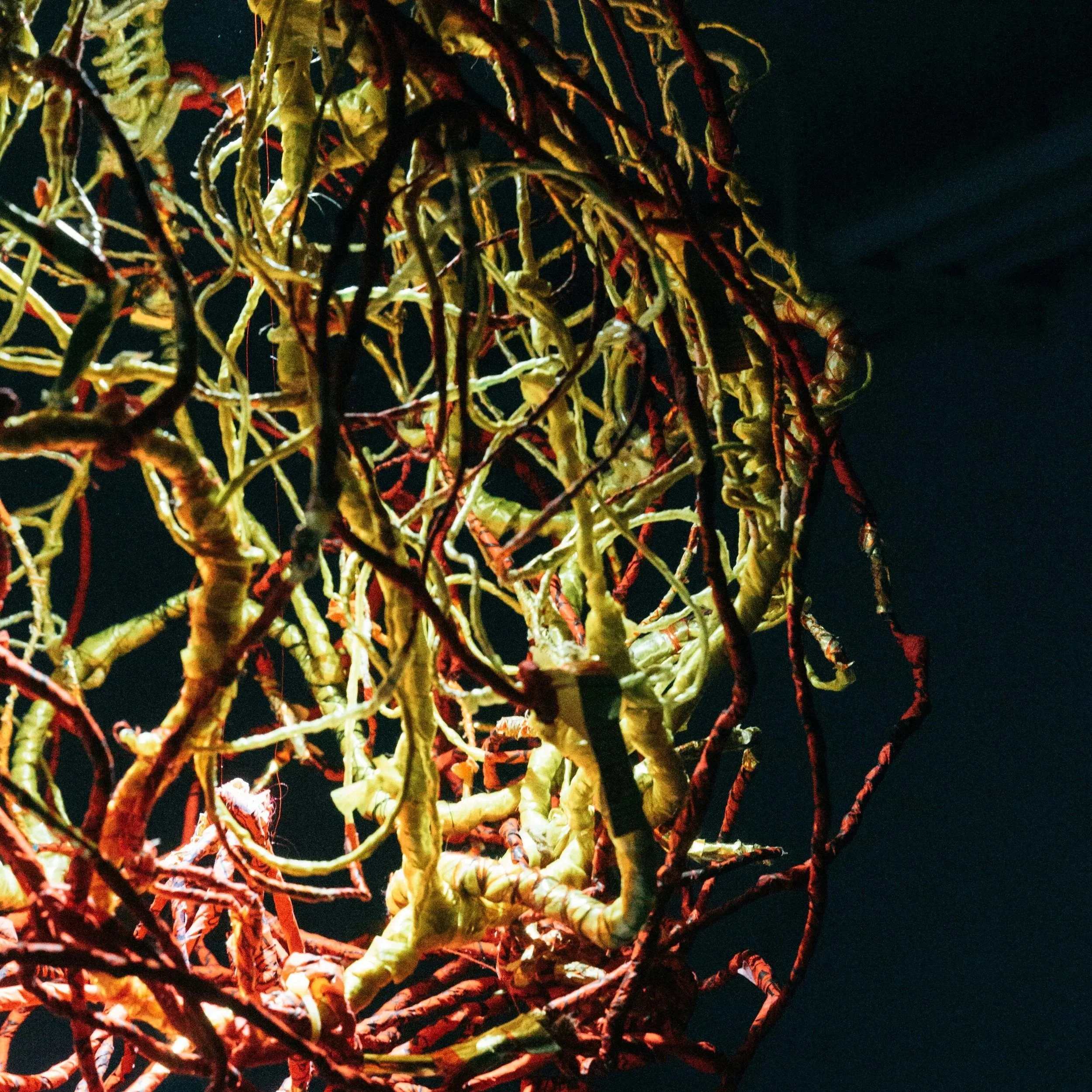

Place-Based Transcultural Practices: Designing Reciprocity
Place-Based Transcultural Practices: Designing Reciprocity
What happens when reciprocity moves between places?
Following years of research and practice in Borneo, we are pleased to share Place-Based Transcultural Practices: Designing Reciprocity, a position paper published in Diseña, Issue 29, The Planetary Condition: Designs, Coexistences, and Care to Reimagine Habitability. The article was published on 31 August 2026.
The paper brings together conversations across two very different yet resonant contexts: Borneo and Gaelic Scotland.
Co-authored by Wendy Teo of Borneo Laboratory and Think & Tink, Professor Lynn-Sayers McHattie of The Glasgow School of Art, Àdhamh Ó Broin of CHARTS, Associate Professor James Oliver of RMIT University, and Dr Zoë Prosser of The Glasgow School of Art, the paper asks how reciprocity might be designed through relationships with place, culture, landscape and living histories.
For Borneo Laboratory, this is a continuation of a much longer journey.
From place-based practice to transcultural dialogue
Our work has always been grounded in the belief that knowledge is situated.
It emerges from particular landscapes, communities, histories, materials, languages and ways of living. It cannot always be separated from the relationships through which it is carried.
Over the years, projects such as The Big Trip, Cultural Assets & Vernacular Materials, Serumpun and On Reciprocity have brought us into encounters with different communities and practitioners across Borneo and beyond.
These encounters have encouraged us to move away from approaches that seek to extract knowledge from a place, towards practices that ask how we might learn with a place.
The Diseña paper develops this inquiry through dialogue between Borneo and Gaelic Scotland, exploring what can become visible when place-based knowledge systems meet across geographical and cultural differences.
Rather than searching for a universal model, the paper stays with the encounters themselves.
It considers how landscape is understood, how cultural memory is carried, how relationships with place are sustained, and how designers and researchers might become more attentive to the histories and power relations within which their work takes place.
Designing Reciprocity
At the centre of the paper are the Seven Dimensions of Reciprocity, which emerged through the dialogues and practices developed around On Reciprocity.
They offer a way to think about reciprocity not simply as an exchange between two parties, but as a deeper condition of relationship.
The dimensions invite us to consider reciprocity through exchange, acknowledgment, responsibility, balance, transformation, ecosystems and intangible forms.
But the paper also asks us to look beyond the dimensions themselves.
What are the conditions that allow reciprocity to happen?
Who has the power to invite, participate, speak or decide?
What histories are carried into a relationship?
What happens when knowledge has been displaced, appropriated or made invisible?
And how might design become more accountable to the people and places with whom it works?
These questions are particularly important when engaging with Indigenous communities and place-based knowledge systems. The paper argues for practices that remain attentive to living histories, power, dispossession, displacement and justice.


From Borneo, and beyond Borneo
For us, the significance of this publication is not simply that Borneo Laboratory is represented in an international academic journal.
It is that a body of learning rooted in Borneo can enter into dialogue with another place-based cultural context, without needing to become universalised or detached from where it came from.
The conversation between Borneo and Gaelic Scotland reminds us that reciprocity does not require sameness.
Perhaps it is precisely through difference that we can recognise shared questions:
How do we remain accountable to place?
How do we carry knowledge without owning it?
How do we work across difference without flattening it?
And how might design help us practise more attentive forms of coexistence?
For Borneo Laboratory, this is another step in an ongoing inquiry into place, relationality and reciprocity.
The work continues through practice, through research, and most importantly, through the relationships that make both possible.
Place-Based Transcultural Practices: Designing Reciprocity
Diseña, No. 29, 2026
Lynn-Sayers McHattie · Àdhamh Ó Broin · James Oliver · Zoë Prosser · Wendy Teo Boon Ting