

Art Residency Profile III - Min Jou Lee
“Early Kuching was once an undeveloped swamp covered with mangroves, which gave rise to the name ‘Mud Fragrance.’ The character ‘泥’ also refers to earth, or land.”
This land, once covered with dense mangrove swamps, seemed to hold me tightly to this place. The month I spent in Kuching passed incredibly quickly. Somehow, this month felt less like an ending than a beginning—a preparation for all the wonderful things that may come in the future.
During my time here, I was often drawn to the local Chinese culture. The familiar faces and languages, and the similarities in Taoist traditions, initially made me feel close to home. Yet, when I looked more closely, I began to notice so many differences: ritual printed materials I had never seen in temples in Taiwan, different kinds of flower arrangements, incense and candle oils in various colors and forms, as well as the clothing of the deities and the objects placed around them. From the perspective of ancestry, Taiwanese Chinese and Malaysian Chinese share similar origins, with many tracing their roots to the coastal regions of Fujian and Guangdong in China. So how did we gradually develop such different cultural and culinary practices?
One possible explanation lies in Kuching’s multi-ethnic social environment, national policies, and different historical contexts. Within these circumstances, the preservation of Chinese culture, beliefs, and traditions became a way of maintaining a sense of cultural identity. In contrast, Taiwanese folk religion has developed through the long-term interweaving of Taoism, Buddhism, and local folk beliefs, and some traditional ritual practices have gradually been integrated or simplified. The forms of worship and religious practices I encountered in Kuching, however, gave me a sense of something ancient, tangible, and deeply rooted in everyday life.
Before leaving Kuching, I made a special trip to Bau. On the journey, I listened to Teochew, Hakka, and Malay overlapping with one another. I tried to guess what they were talking about from the few words I could understand. In the way one elderly man spoke, I suddenly heard my grandfather’s laughter—the pauses and breaths between his sentences, and the rhythm of speech that seemed to belong to people of his generation, now in their sixties and seventies.
Before I came to Kuching, my grandfather had told me that he had also visited Kuching thirty years ago. At the time, he was running a plywood business in Chiayi. As the supply of large timber in Taiwan was gradually declining, together with the government’s logging restrictions, he and his friends began working with partners to expand their timber business into Malaysia. He was thirty years old that year, and it was his first time on an airplane. He told me that the food here was very similar to that in Taiwan, and that the local products included bird’s nest, rubber, and large quantities of timber. However, the business ultimately turned out to be a scam. All of their equipment and machinery were stolen by their business partners in Kuching, leaving them with nothing.
After arriving in Kuching, I began to think about my grandfather’s journey here, and how different his purpose was from mine. The work I developed during my residency, Those Who Never Came Out, grew from my personal reflection on the courage of Chinese people who moved across borders in the 19th century, their determination upon finally arriving in a foreign land, and their efforts to survive and resist colonial rule.
In particular, I wanted to express my respect for the families of the fighters—their parents, wives, children, and others who could not step onto the battlefield. Through this work, I hope to transform what remains as a faint sentence in the aftermath of history into something that can be felt as real loss and mourning.
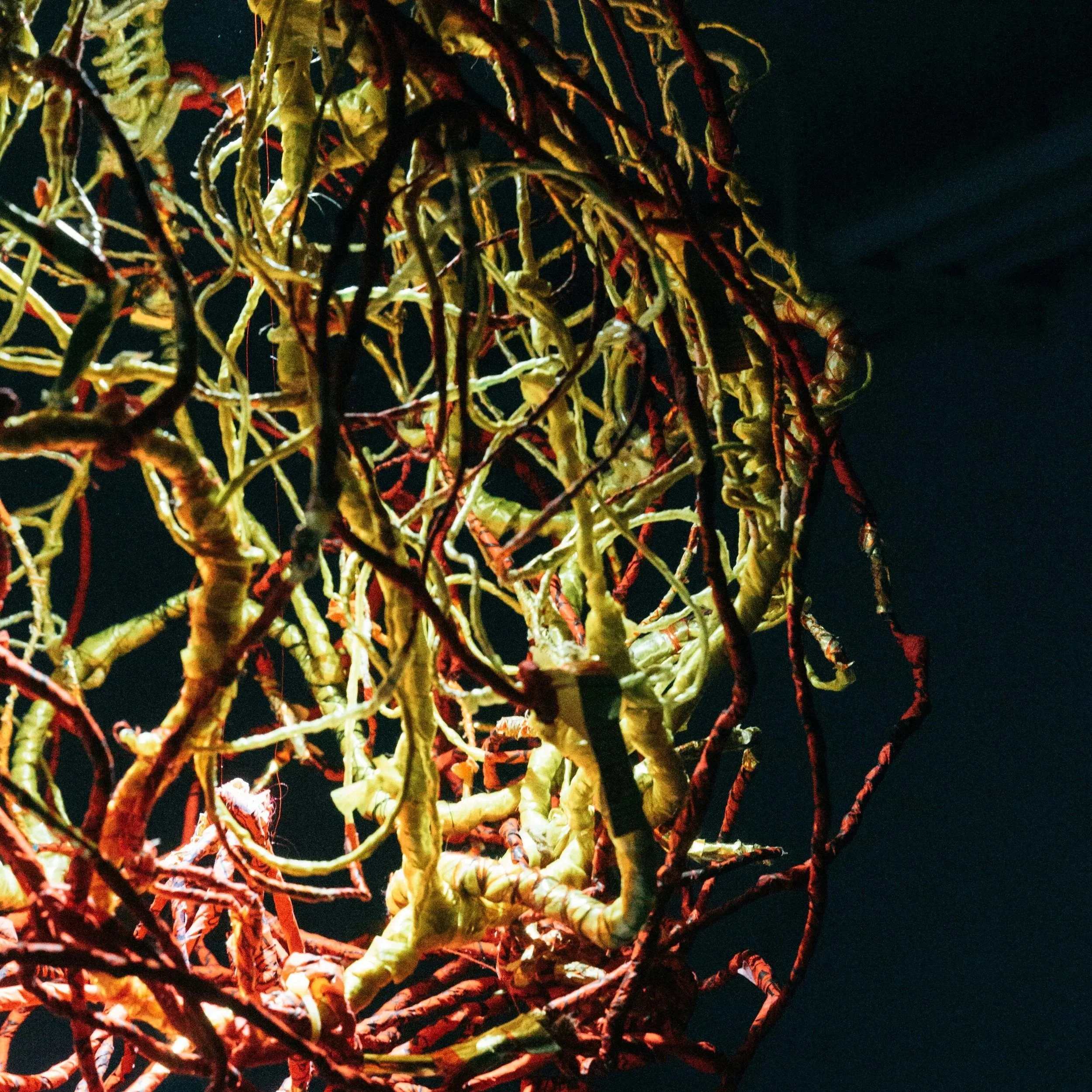
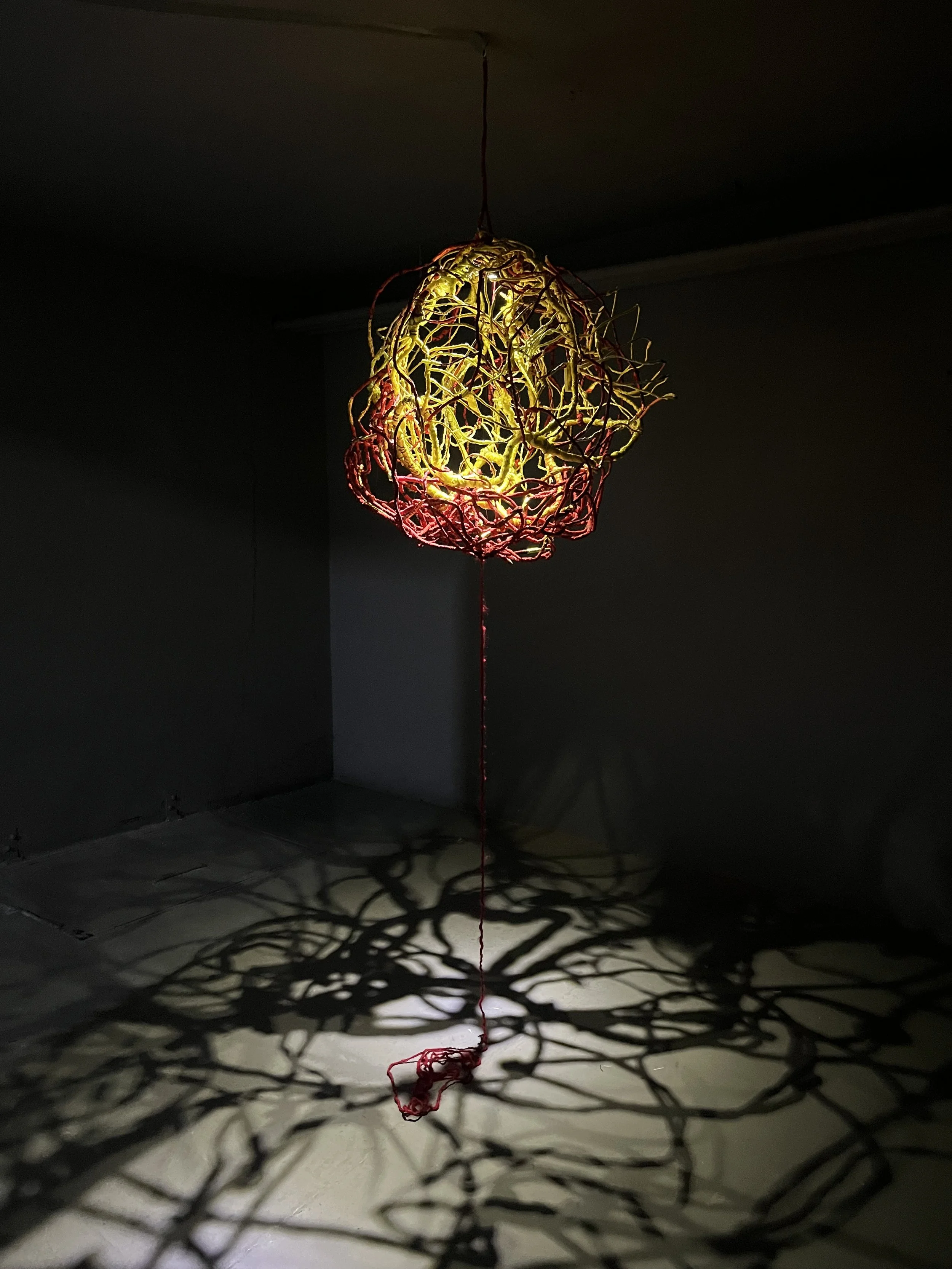
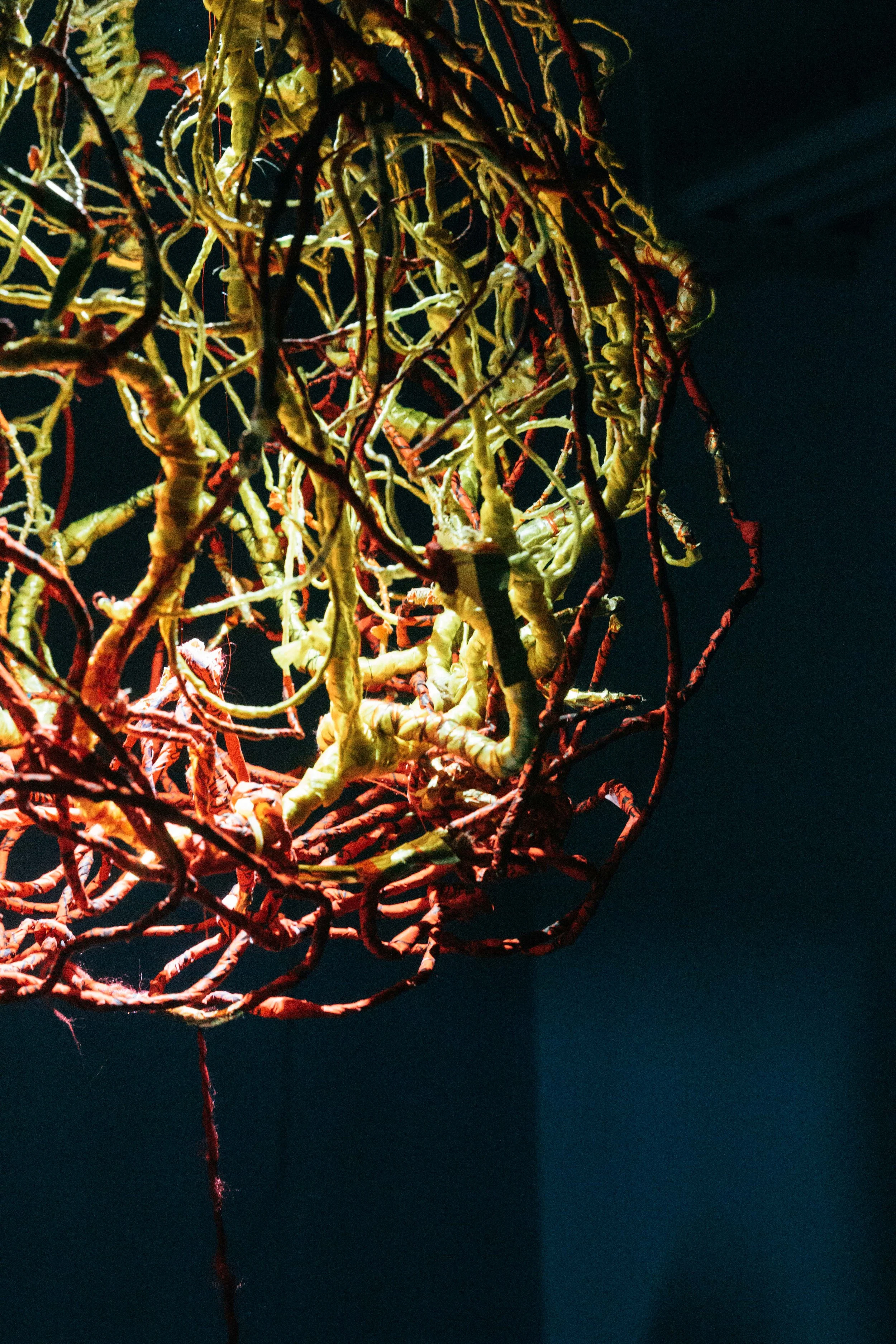
Those Who Never Came Out
The work takes the “Ghost Cave” from the 1857 Bau Chinese uprising as its point of departure. After the Chinese forces were defeated, some of the miners’ wives, mothers, and children fled into the cave for shelter. They ultimately perished from the fire and smoke that were set outside the cave, becoming the final victims of this story of war.
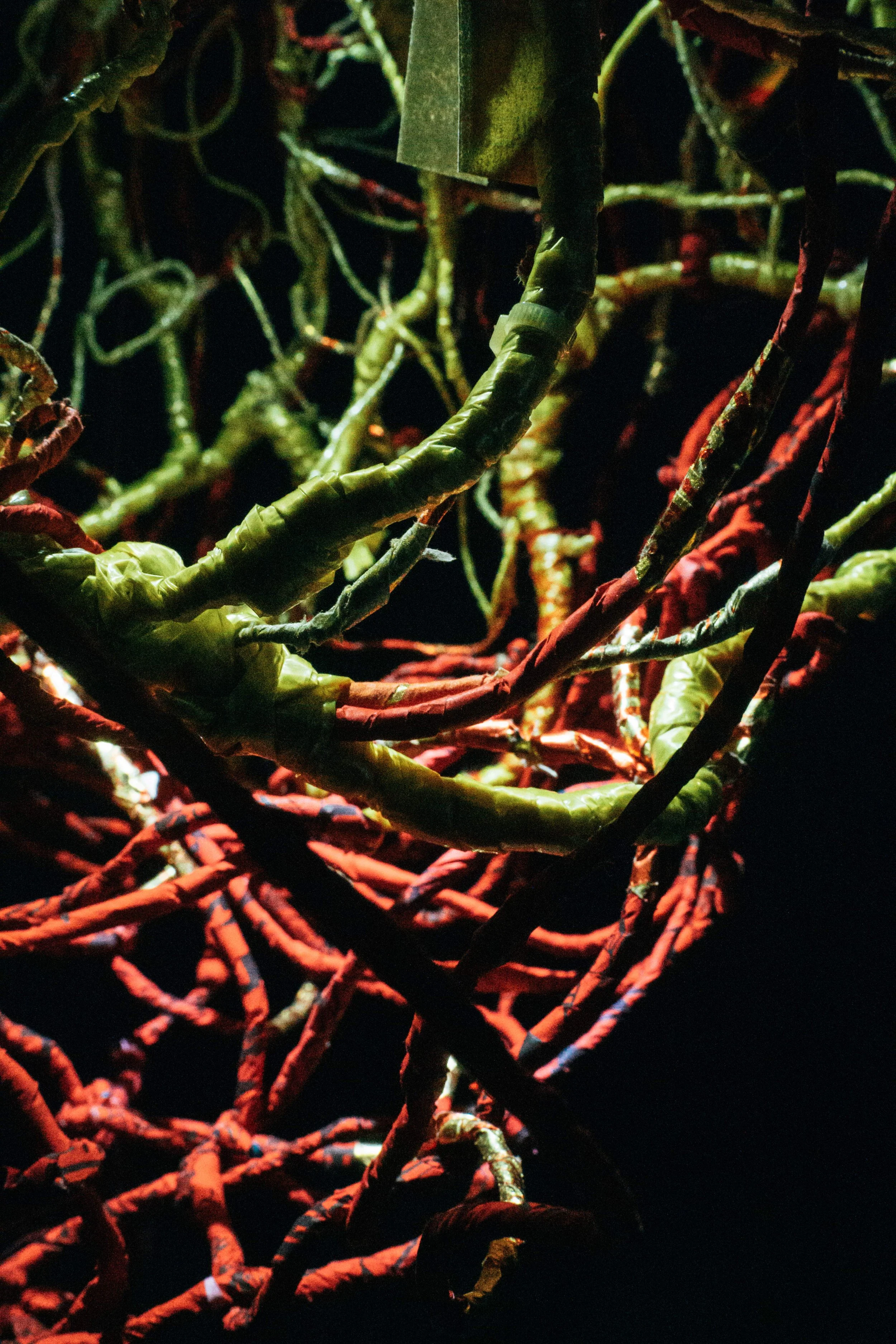
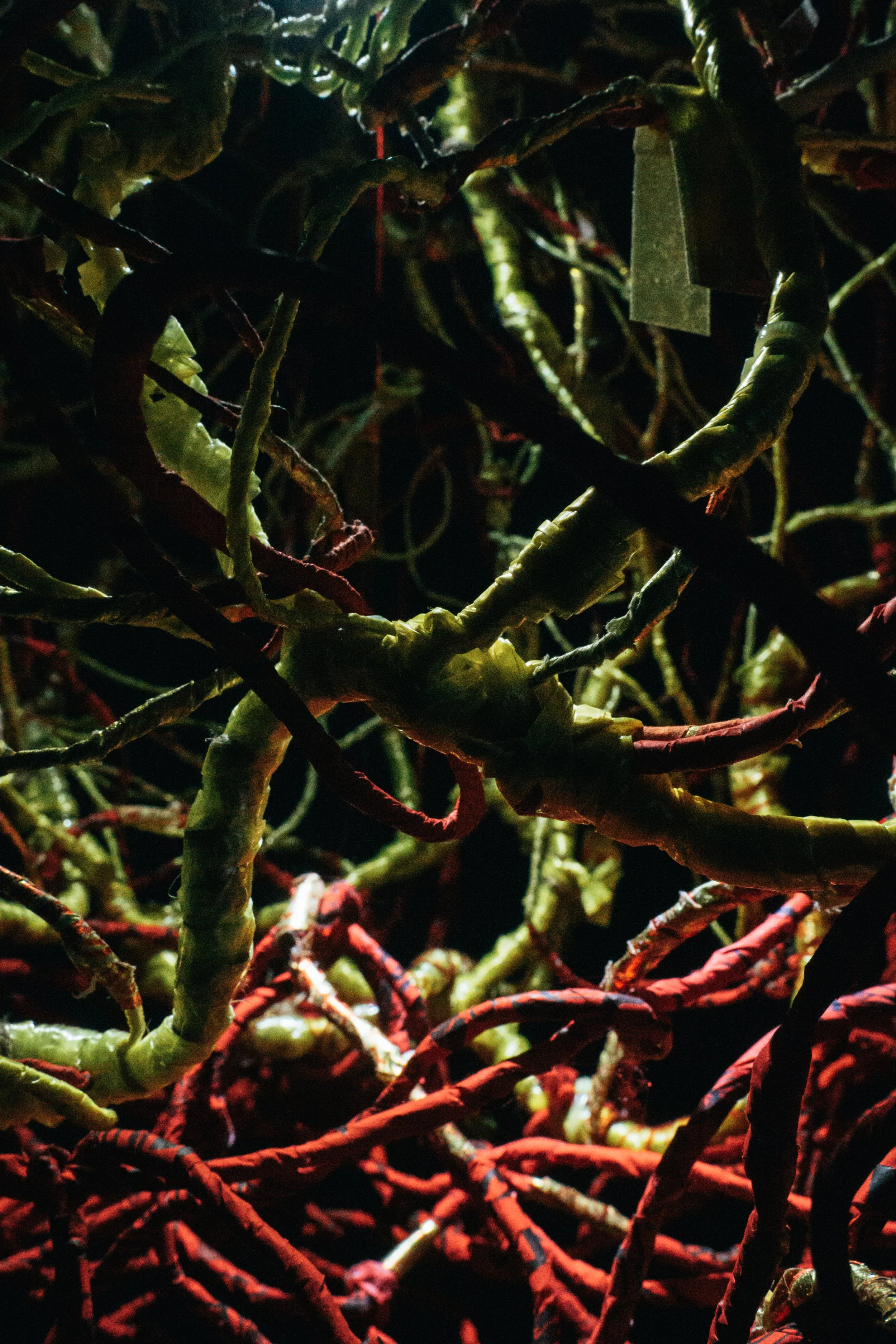
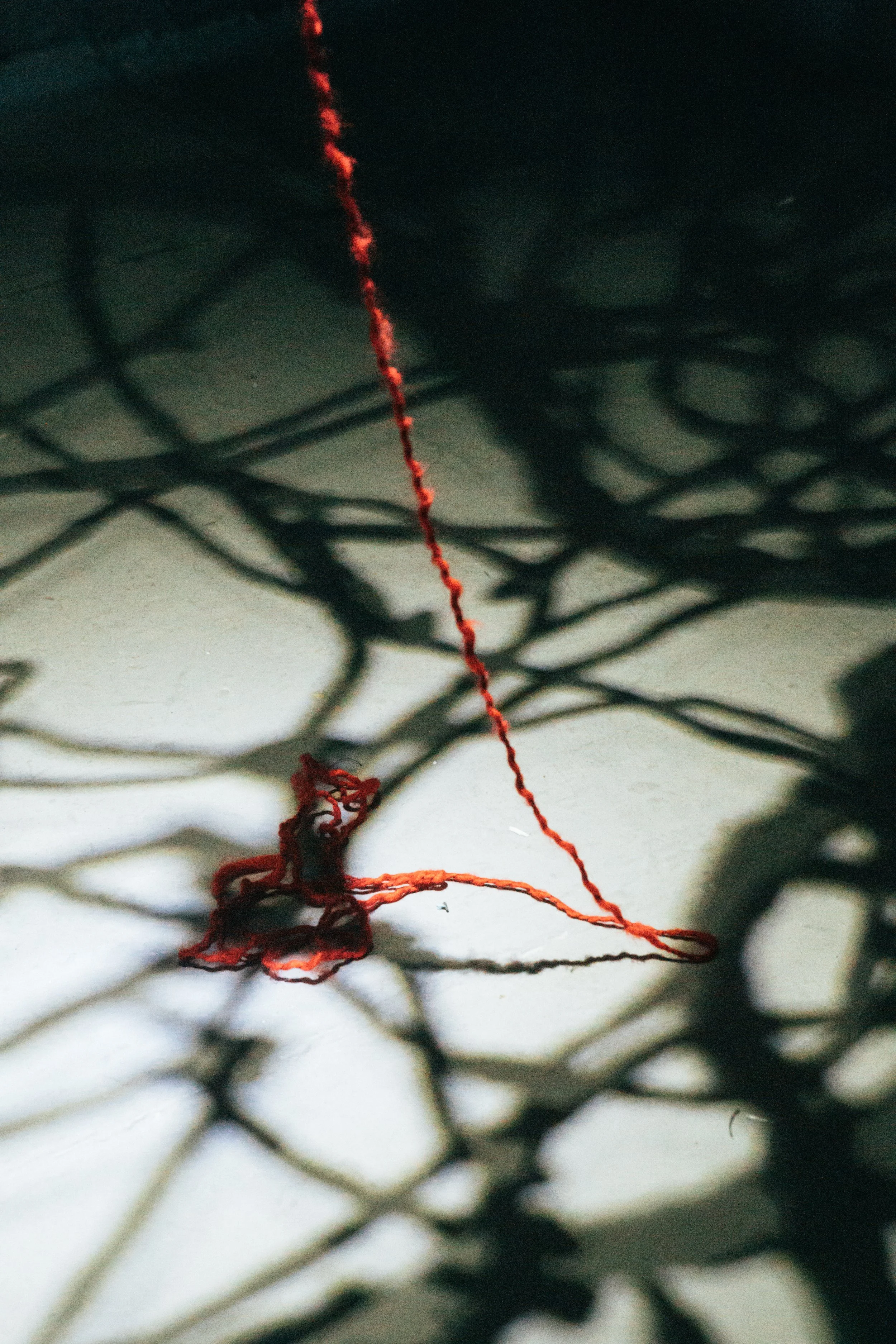
Joss paper, traditionally understood as a medium connecting the living and the dead, led me to consider using this material as a response to the tragedy. Through repetitive wrapping, knotting, and binding, the joss paper gradually takes the form of something suspended between a body, a cave, and a shelter. It resembles both the final dwelling of the dead and the bodies of a group of people gathering together and clinging to one another as death approaches. The fragility and entanglement of the joss paper allow shelter and death to exist simultaneously.
這裏一片漆黑 寒冷
卻感覺安全
我的媽媽和奶奶告訴我
別擔心 晚些就出去
原本窩在腳邊的小狗
聽見了什麼
緊張地跑往亮光處
震耳欲聾的槍聲
在腦裡不停徘徊
使我幾乎失聰
我緊緊將臉貼在媽媽胸口
聽著她的心跳
白色幽靈
以極度輕盈的腳步
將我們團團包覆
媽媽和奶奶緊緊抱著我
跟我說乖仔唔惊
晚些就出去
晚些
就出去
Here, only darkness.
Cold, but safe.
Mother and Grandmother whisper,
Don’t be afraid.
We’ll go out later.
The little dog at my feet hears something,
and runs toward the light.
Gunshots— echoing and echoing,
until I can no longer hear.
I press my face against Mother’s chest,
listening to her heart.
White ghosts drift toward us,
light as breath,
surrounding us.
Mother and Grandmother hold me close.
乖仔唔惊.
Don’t be afraid,
my dear.
We’ll go out later.
Later.
